
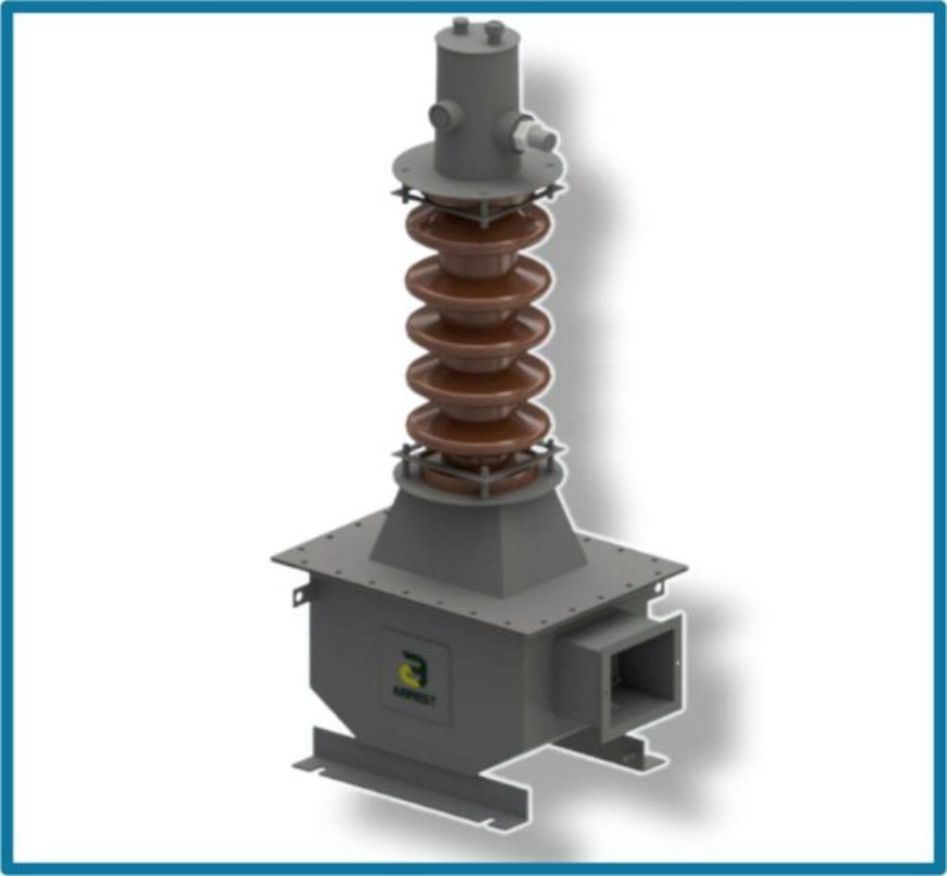

How to Choose an Outdoor 33kV Potential Transformer
A potential transformer (PT) in an outdoor 33kV substation has a tough job. It must give meters and relays an accurate voltage signal for decades. At the same time, it faces rain, dust, pollution, strong sun and lightning surges.
For this reason, you need to specify it with care. In this guide, AMREST Electricals explains the points that matter most, so your enquiry is complete and your PT lasts.
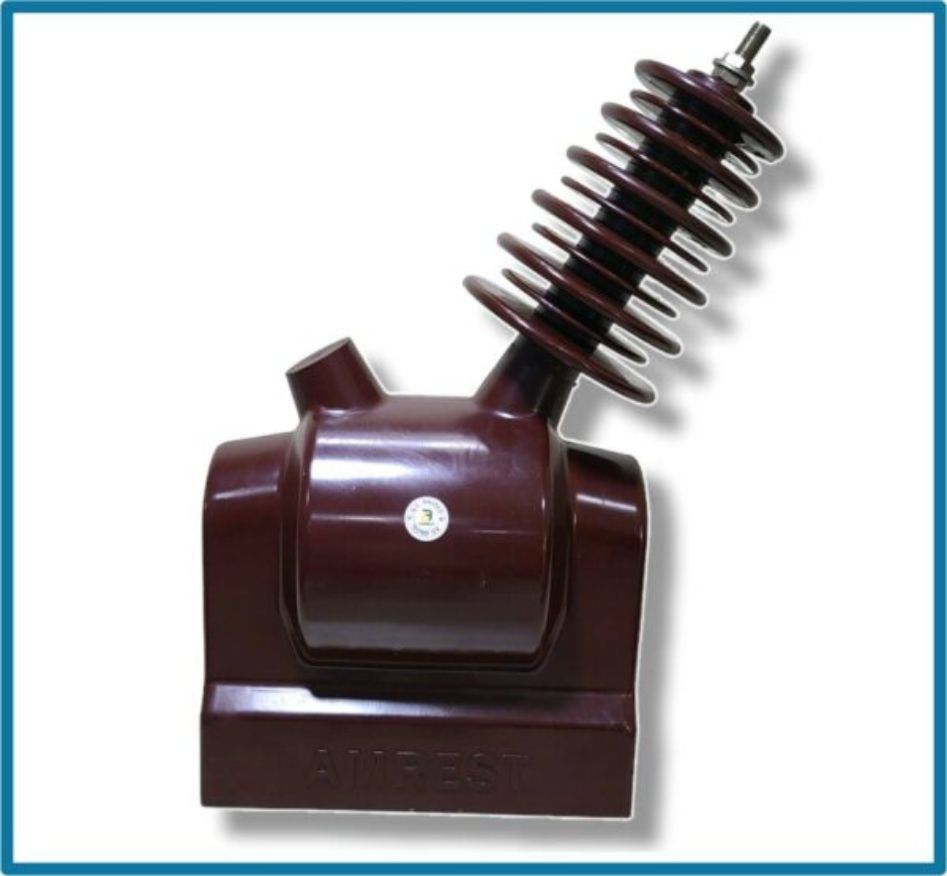
Choose the right voltage ratio
First, decide how the PT connects to the system. This choice sets the ratio.
| Connection | Typical ratio | When to use it |
|---|---|---|
| Line to earth (single phase) | 33kV/√3 : 110V/√3 | Most common. Three units in star give phase and line voltages. |
| Line to line | 33kV : 110V | Used when only line voltage is needed, for example in V-V schemes. |
| Residual winding | 110V/3 | Added for earth fault detection through an open-delta connection. |
So, if you need earth fault protection, mention the residual (open-delta) winding clearly in your enquiry.
Pick the accuracy class
Next, match the class to the job. In fact, one PT can carry both a metering and a protection class.
Revenue metering
For example, utilities use class 0.2 at high-value billing points.
General metering
Also, class 0.5 suits most HT consumer and feeder meters.
Protection
Finally, class 3P or 6P feeds relays. For instance, a PT can be 0.5/3P.
Set the burden and voltage factor
Then, add up the VA of every meter and relay on the PT. After that, choose a rated burden just above that total. However, do not oversize it too much, because accuracy can drift at very low load.
Also, check the rated voltage factor. In general, PTs run at 1.2 times rated voltage without limit. In addition, earthed systems usually need 1.5 for 30 seconds. On the other hand, systems without effective earthing usually need 1.9 for 8 hours.
Choose oil-immersed or resin cast
Oil-immersed PT
- First, a long-proven choice for utility yards
- Also, oil gives insulation and cooling
- However, you need to check oil level over time
Outdoor resin cast PT
- First, it is oil-free, so it has no leak risk
- Also, it needs less routine maintenance
- However, it must use outdoor-grade, UV-resistant resin
Match insulation and creepage to the site
For 33kV, the highest voltage for equipment is 36kV. Typically, the insulation level is 70kV rms and 170kVp impulse. Moreover, outdoor PTs need enough creepage for the site’s pollution.
| Site pollution | Example | Specific creepage | Approx. total for 36kV |
|---|---|---|---|
| Light | Rural, low industry | 16 mm/kV | ~580 mm |
| Medium | Towns, some industry | 20 mm/kV | ~720 mm |
| Heavy | Industrial zones, near coast | 25 mm/kV | ~900 mm |
| Very heavy | Coastal, cement, chemical | 31 mm/kV | ~1,116 mm |
In practice, many Indian utilities ask for 25 or 31 mm/kV. Therefore, always follow your tender or utility specification. Also, tell us if the site is above 1,000 m altitude.
Protect the PT on site
- Never short-circuit a PT secondary. Otherwise, very high current can damage the PT.
- So, always fit secondary fuses or MCBs.
- Also, protect the HV side with suitable fuses where your scheme needs them.
- Finally, earth the PT body and one point of the secondary circuit.
Ferroresonance
- On systems without solid earthing, single-phase PTs can sometimes enter ferroresonance.
- As a result, voltage and current can rise and overheat the PT.
- Therefore, engineers often add a damping resistor across the open-delta winding.
- So, tell us your system earthing when you send an enquiry.
What to send your PT manufacturer
Finally, use this checklist. As a result, you will get an accurate quote faster.
Frequently asked questions
What is the usual ratio of a 33kV PT?
Usually, it is 33kV/√3 : 110V/√3 for line-to-earth connection. However, line-to-line PTs use 33kV : 110V.
Can one PT do both metering and protection?
Yes. For example, a PT rated 0.5/3P serves both meters and relays.
Why do PTs need a residual winding?
Because an open-delta residual winding helps relays detect earth faults. So, ask for it if your scheme needs it.
Oil or resin cast: which is better outdoors?
Both work well. However, resin cast needs less maintenance, while oil-immersed is a long-proven utility choice.
Does AMREST make custom outdoor 33kV PTs?
Yes, of course. We build each PT to your ratio, class, burden, creepage and layout.
Leave a Reply